Big Island Waterfalls: Complete Guide to Hawaii's Best Falls
The Big Island's windward side is waterfall country, full of towering cascades hidden in jungle valleys. Here's how to see the best ones, from roadside stops to guided hikes.
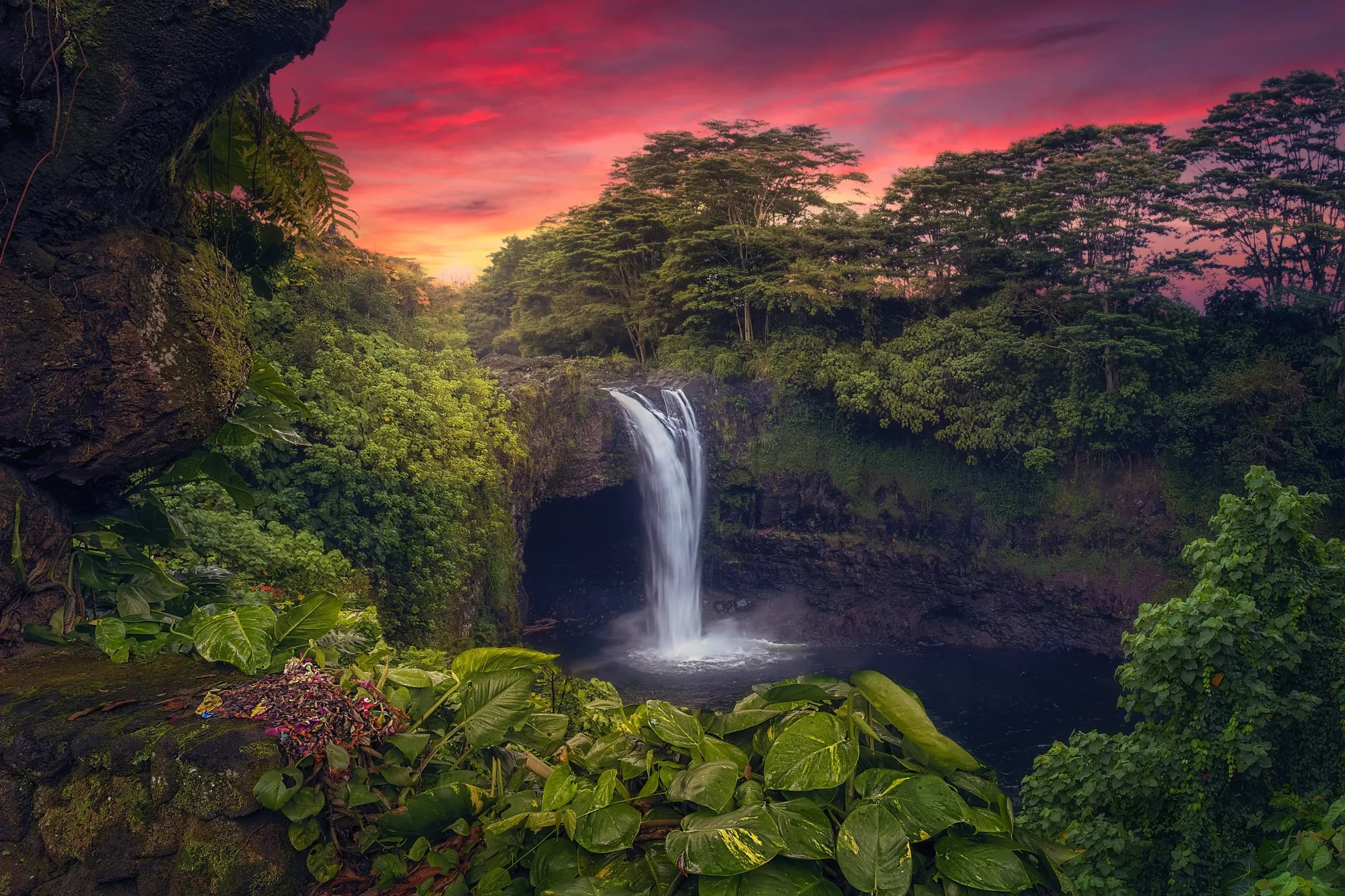
The windward side of the Big Island gets over 130 inches of rain per year, and all that water has to go somewhere. It goes over cliffs. Hundreds of them. The Hamakua Coast north of Hilo is the waterfall capital of Hawaii, with cascades hidden in every valley and gulch along the 50-mile stretch between Hilo and Waipio Valley. Some are easy roadside stops. Others require hikes, guided tours, or the willingness to rappel down a rock face.
The Major Waterfalls: What to See and How to Get There
Akaka Falls (442 feet)
Akaka Falls is the one you've seen on postcards. A single 442-foot plunge into a gorge surrounded by tropical jungle: bamboo, gingers, orchids, tree ferns. The viewpoint is reached via a paved 0.4-mile loop trail through a botanical wonderland. The trail also passes Kahuna Falls (100 feet), which often gets overlooked.
Getting there: Off Highway 19 near Honomu, about 15 minutes north of Hilo. Well-signed, easy to find. $5 parking fee (or free with Hawaii State Parks annual pass).
Time needed: 30-45 minutes for the trail loop. Don't rush. The vegetation is as impressive as the falls.
Best conditions: Morning light hits the falls directly. After heavy rain, the flow increases dramatically but fog can obscure views. Dry mornings are ideal for photography.
Rainbow Falls (80 feet)
Rainbow Falls (Waiānuenue) is the most accessible waterfall on the island. You can literally see it from the parking lot. An 80-foot cascade that drops into a large pool, surrounded by mango trees and giant banyan roots. On sunny mornings, a rainbow forms in the mist at the base, which is how it got its English name.
Getting there: Inside Hilo, 2 minutes from downtown. Free parking, no hiking required.
Time needed: 15-20 minutes. Walk to the lower viewpoint, then take the short path above the falls for a different perspective.
Best conditions: Mid-morning on a sunny day for the rainbow. Heavy rain makes it more dramatic but also muddier.
Umauma Falls
Umauma Falls is a stunning three-tiered cascade on private land, accessible through World Botanical Gardens. Each tier drops into a pool before spilling to the next level, and the full cascade is about 300 feet. The gardens themselves are worth the visit, with a collection of over 5,000 tropical species.
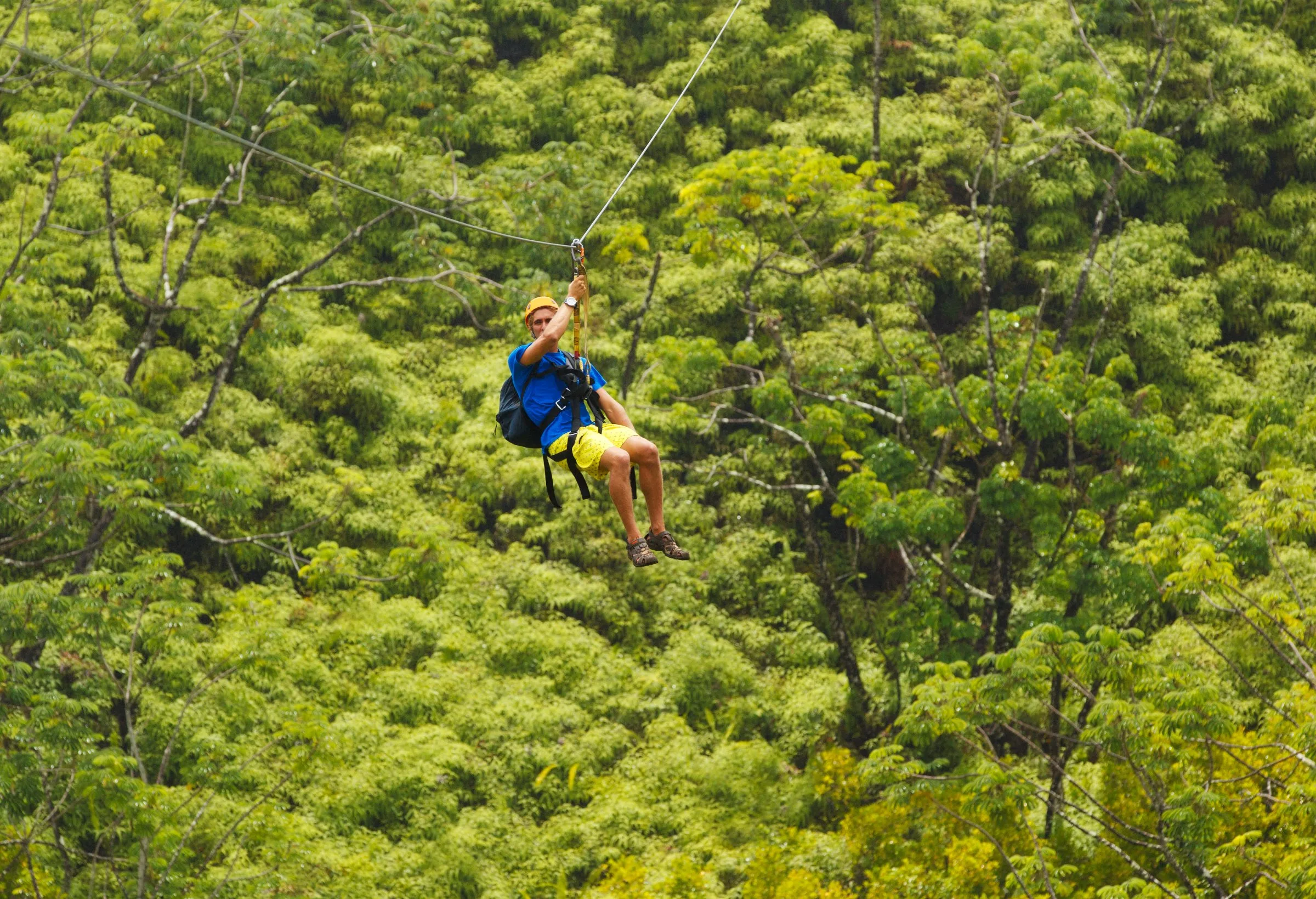
Umauma is also home to some of the Big Island's best adventure tours. Umauma Falls zipline tours send you across the gorge above the falls on nine different lines. For the truly adventurous, the waterfall rappelling tour takes you down the rock face alongside the cascades.
Umauma Triple-Tier Waterfall Rappel and River Tour
Direct Booking Guarantee: the tour operator takes your booking and runs your tour. We may earn a commission, never added to your price.
Getting there: Off Highway 19, about 16 miles north of Hilo. Garden entry fee applies.
Time needed: 1-2 hours for the gardens and falls viewpoint. Add 2-3 hours for zipline or rappelling.
Hi'ilawe Falls (1,450 feet)
Hi'ilawe Falls is the tallest waterfall on the Big Island and one of the tallest in all of Hawaii. It plunges 1,450 feet in two tiers down the back wall of Waipio Valley, a near-vertical cliff face that's visible from the valley floor. The catch: getting to it requires hiking down the steep Waipio Valley road (a 25% grade that's only navigable by 4WD), then crossing the valley and a river.
Most visitors see Hi'ilawe from the Waipio Valley Lookout at the top, which is still impressive, even from a mile away. Guided valley tours take you closer.
Getting there: Waipio Valley Lookout is at the end of Highway 240, about 50 miles north of Hilo. The lookout is easy; descending into the valley is a serious undertaking.
Kulaniapia Falls (120 feet)
Kulaniapia Falls is a privately-owned 120-foot waterfall on the outskirts of Hilo, surrounded by 22 acres of botanical gardens. It's one of the few waterfalls in Hawaii where you can swim in the pool at the base (when conditions allow). The property also operates as a luxury inn. You can literally wake up to a waterfall outside your window.
Getting there: A few minutes outside Hilo. Entry fee for day visitors. Reservations required.
Pe'epe'e Falls and Boiling Pots
Pe'epe'e Falls flows into a series of naturally carved pools that bubble and churn when the river is running hard, hence the nickname "Boiling Pots." The pools cascade from one to the next through a lava rock channel. It's a beautiful sight from the viewpoint above, but don't even think about swimming. The currents are deadly and have killed multiple people.
Getting there: Just upstream from Rainbow Falls in Hilo. Same road, 2 minutes further. Free, no hiking.
Onomea Falls
Onomea Falls drops through a lush valley within the Hawaii Tropical Bioreserve along the Pepe'ekeo Scenic Route. The garden trail takes you through one of the most beautiful botanical collections in Hawaii, with the falls as a centerpiece. You can also see Onomea Falls from the water. Hilo Ocean Adventures runs a waterfall cruise along the coast.
Cliffs of Hawai’i Onomea Waterfall Cruise
Direct Booking Guarantee: the tour operator takes your booking and runs your tour. We may earn a commission, never added to your price.
Self-Drive Waterfall Route: The Hamakua Coast
The Hamakua Coast Drive (Highway 19 from Hilo to Waipio Valley) is the Big Island's most scenic drive, and it passes near most of the major waterfalls. Here's a suggested one-day waterfall route:
- Morning: Start in Hilo with Rainbow Falls and Pe'epe'e Falls (30 minutes total, free).
- Mid-morning: Drive the Pepe'ekeo Scenic Route and visit Hawaii Tropical Bioreserve for Onomea Falls (1-2 hours).
- Late morning: Continue to Akaka Falls (45 minutes for the trail).
- Lunch: Stop in Honomu town, which is tiny but has good plate lunch spots.
- Afternoon: Umauma Falls at World Botanical Gardens (1-2 hours).
- Late afternoon: Drive to Waipio Valley Lookout for the distant view of Hi'ilawe Falls. End the day here.
Total drive time: about 2 hours of driving between stops. Add 5-6 hours of stop time. This is a full day, and a great complement to a Hilo itinerary.
Guided Waterfall Tours
If you don't want to self-drive, guided waterfall tours handle the logistics and add expert commentary:
- Kohala Waterfalls Adventure takes you on a hike through private ranch land to hidden waterfalls in the Kohala Mountains that you can't access on your own. This is the top-rated waterfall hike on the island.
- Waterfall Hiking Tour near Hilo is a guided hike to a swimming waterfall with local guides who know the back trails.
- Circle island tours like the Grand Circle Island Tour include waterfall stops (usually Akaka or Rainbow Falls) as part of a full-island itinerary.
Waterfall Rappelling: For the Adventurous
The Big Island is one of the few places in the world where you can rappel down a waterfall. Waterfall Rappelling Hawaii runs guided adventures where you descend alongside (and sometimes through) cascading water on ropes. No experience needed; they teach you everything. The Botanical World Adventures rappelling option combines the experience with their gardens.
Waterfall Rappelling
Direct Booking Guarantee: the tour operator takes your booking and runs your tour. We may earn a commission, never added to your price.
Rappel Basecamp Adventure to the Waterfall
Direct Booking Guarantee: the tour operator takes your booking and runs your tour. We may earn a commission, never added to your price.
This is a serious rush. You're on a cliff face with water spraying past you, jungle canopy above, and a pool waiting below. Physical requirement: you need to be able to hold your body weight on a rope and handle exposure to heights. Age minimum is typically 10-12 years.
Best Time to See Waterfalls
After rain = biggest waterfalls. The windward side gets the most rain November through March. Post-storm waterfalls are at their most dramatic. Akaka becomes a thundering monster, and temporary waterfalls appear on cliffs that are dry the rest of the year.
Morning light is best for photography. Many falls face east and catch direct morning sun. Rainbow Falls literally requires morning sun for its namesake rainbow.
Dry season (May-September): Waterfalls are smaller but trails are less muddy and views are clearer. Some of the smaller cascades may be reduced to trickles.
The sweet spot? Visit right after a rain in winter. The falls are massive, and often the clouds clear within hours, giving you dramatic light against massive water volume.
Tips
- Wear good shoes. Trails are often muddy and slippery. Hiking shoes or at minimum sturdy sneakers. Leave the flip-flops in the car.
- Bring rain gear. The windward side earns its name. A light rain jacket takes 30 seconds to put on and saves your day.
- Mosquito repellent. The wet jungle valleys are mosquito habitat. Bring spray.
- Never swim above a waterfall. The currents near the lip are much stronger than they look. People die this way every year in Hawaii.
- Respect private property. Many waterfalls are on private land. Stick to the established access points and tours.
Big Island Waterfalls: Common Questions
What is the easiest waterfall to see on the Big Island?
Rainbow Falls in Hilo. The 80-foot cascade is visible from the parking lot, there is no hiking, parking is free, and it sits two minutes from downtown Hilo. Come mid-morning on a sunny day, when the rainbow forms in the mist at the base.
What is the tallest waterfall on the Big Island?
Hi'ilawe Falls, which drops 1,450 feet in two tiers down the back wall of Waipi'o Valley. Most visitors see it from the Waipi'o Valley Lookout about a mile away, because reaching the base means descending a road with a 25 percent grade that only 4WD can manage, then crossing the valley and a river.
When is the best time to see Big Island waterfalls?
Right after rain in winter. The windward side gets its heaviest rain from November through March, and post-storm flow is when Akaka becomes a thundering monster and temporary falls appear on cliffs that are dry the rest of the year. The dry season from May to September gives smaller falls but clearer views and less mud.
For more Hilo-side activities, see our complete guide to things to do in Hilo.