Deep-Sea Fishing in Kona: The Sportfishing Capital Guide
Kona is the billfish capital of the Pacific. Whether you're chasing marlin, mahi-mahi, or yellowfin tuna, here's everything you need to know about fishing the Big Island.
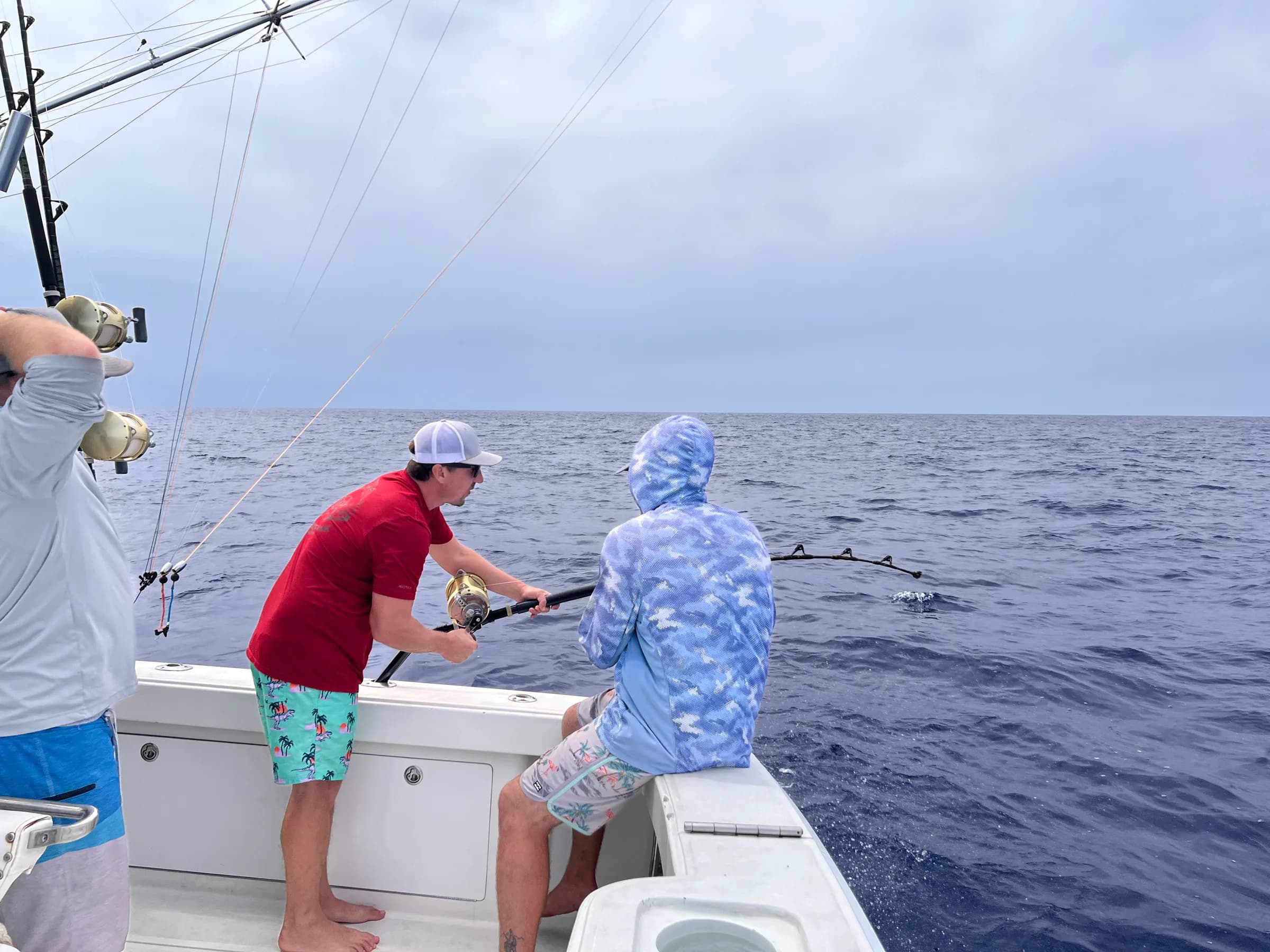
The ocean off Kona drops from the harbor to 6,000 feet within a mile. That's not a typo. You can be trolling over a mile of open ocean in the time it takes to eat a sandwich. This absurd underwater geography is why Kona has been the sportfishing capital of the Pacific for over sixty years, why more blue marlin granders (1,000+ pounds) have been caught here than anywhere else on Earth, and why serious anglers plan entire vacations around a few days on a Kona charter boat.
Why Kona Fishing Is Legendary
Three factors come together here that don't exist anywhere else. First, the deep water proximity. Blue marlin, yellowfin tuna, and other pelagics live in deep offshore currents, and in Kona, those currents pass right by the harbor mouth. In other sportfishing destinations, you burn two hours of charter time just getting to the fishing grounds. Here, you're on fish in 15 minutes.
Second, the Kona coast is sheltered from trade winds by Mauna Kea and Mauna Loa, two 14,000-foot volcanoes that block the prevailing weather. This means calm seas 340+ days a year. While boats in Cabo or Costa Rica cancel for weather regularly, Kona boats almost never do.
Third, the convergence zone. The Big Island's mass deflects the North Equatorial Current, creating eddies and upwellings along the Kona coast that concentrate baitfish. Where bait concentrates, predators follow. The result is year-round access to blue marlin, striped marlin, yellowfin tuna, mahi-mahi, ono (wahoo), and spearfish.
What You Can Catch: By Season
Blue Marlin (Year-Round, Peak July-September): The king of Kona sportfishing. Blues are present all year, but summer brings the biggest fish. The Hawaiian International Billfish Tournament runs in July/August for good reason. This is when granders (1,000+ pounds) are most likely. Even outside peak, 200-400 pound blue marlin are common catches.
Striped Marlin (November-March): Smaller than blues (100-200 pounds typical) but more acrobatic. They leap repeatedly when hooked, putting on a spectacular show. Winter visitors who can't make it during blue season should target stripeys.
Yellowfin Tuna / Ahi (Year-Round, Peak Spring-Summer): Kona's yellowfin run 20-200 pounds. They're delicious (this is sashimi-grade ahi) and fight hard for their size. Many anglers specifically target tuna because you can eat what you catch.
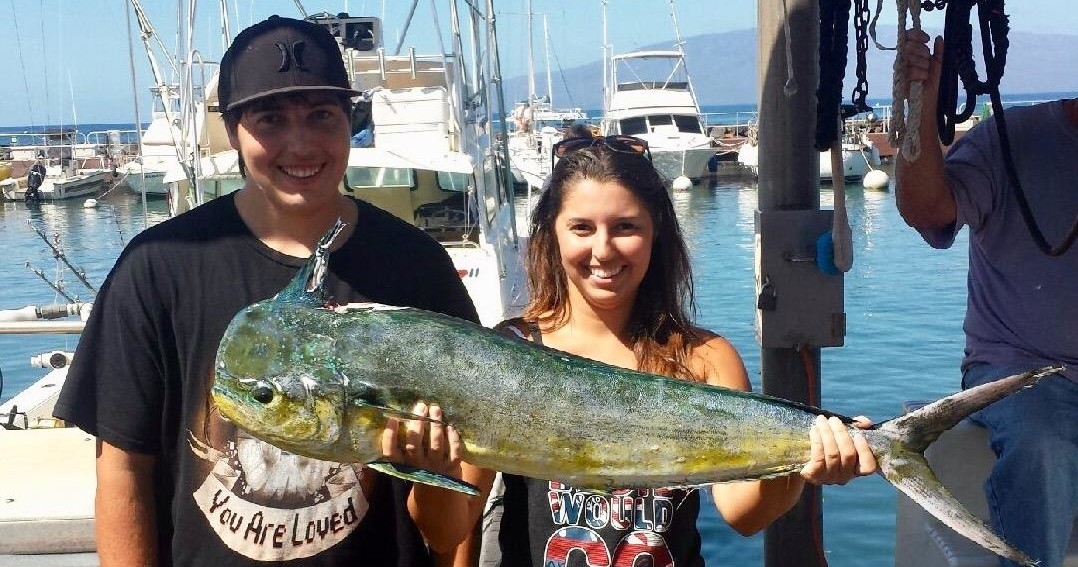
Mahi-Mahi / Dorado (Spring-Fall): Beautiful, fast-growing fish with electric blue and gold colors. They're aggressive biters, great fighters, and outstanding table fare. Mahi average 10-40 pounds, with occasional 50+ pounders.
Ono / Wahoo (Year-Round): The fastest fish in the ocean, hitting speeds of 60+ mph. Ono fillets are considered the best eating fish in Hawaiian waters, with flaky white meat that chefs fight over.
Charter Types: Finding the Right Trip
Half-Day (4-Hour) Charters
The entry point for most visitors. Kona Cowboy's half-day charter is a popular option. You get 4 hours of trolling time, which is enough to hook into mahi-mahi, ono, or tuna on most days. Marlin encounters are possible but less likely in a shorter window.
Half-days are great for: families with kids, anglers who want a taste without committing a full day, and people who get seasick (less time on the water).
Price: $500-800 for the boat (split between your group, typically up to 6 anglers).
Three-Quarter Day (6-Hour) Charters
The sweet spot for serious fishing. AusTruck Fishing Charters runs quality 3/4-day trips that give you enough time to work both the close-in grounds and venture further along the coast for more productive water.
Price: $700-1,000 for the boat.
Full-Day (8-Hour) Charters
If you're targeting blue marlin, this is the format. Reel Escapes' 8-hour charter and Kona Cowboy's full day give the captain time to run patterns, work the ledges, and stay on productive water. Full days consistently produce more fish and bigger fish than shorter trips.
8 Hour Fishing Escape 40' Cabo
Direct Booking Guarantee: the tour operator takes your booking and runs your tour. We may earn a commission, never added to your price.
Price: $900-1,500 for the boat.
Private vs. Shared Charters
Private charters give your group the entire boat. You choose the target species, the captain tailors the day to your skill level, and you keep your catch. Shared charters put you on a boat with other anglers (you rotate on the rods) at a lower per-person cost but with less flexibility.
For families or groups of 4-6, private charters are almost always better value. For solo anglers or couples, shared charters make fishing accessible at $150-250 per person.
Honokohau Harbor: Your Starting Point
Honokohau Harbor is the fishing capital's capital. This is where the charter fleet lives. Located 3 miles north of downtown Kona near Kaloko-Honokōhau National Historical Park, the harbor has free parking, restrooms, and a tackle shop.
Arrive 15-30 minutes before your charter's departure time. The mate will meet you at the boat, help with gear, and give a safety briefing. Most boats provide everything: rods, reels, tackle, bait, ice, and a cooler. You just bring sunscreen, a hat, snacks, and drinks.
After the trip, the mate will clean your catch at the harbor's fish-cleaning station. You'll typically keep a portion of the catch (policies vary by charter), and ahi sashimi made from fish you caught that morning is a special kind of meal. Some restaurants in Kona will cook your catch for you if you bring it in.
The Hawaiian International Billfish Tournament
Running since 1959, the HIBT is the most prestigious marlin tournament in the world. Held annually in late July/early August, it brings teams from dozens of countries to Kona for a week of competitive blue marlin fishing. Even if you're not a participant, it's worth visiting the harbor during tournament week to see the weigh-ins, with massive fish hanging from the scales while crowds cheer.
The tournament has produced some legendary catches: a 1,649-pound Pacific blue marlin (the tournament record) and countless granders. Kona's waters have produced more 1,000-pound blue marlin than any other fishery in the world.
Tips for First-Time Charter Anglers
- Take seasickness meds. Even experienced ocean-goers can get queasy trolling in deep water. Dramamine or Bonine, taken 30 minutes before departure, prevents problems. If you wait until you feel sick, it's too late.
- Wear polarized sunglasses. They cut glare and let you see fish under the surface. They're also essential for eye comfort on an 8-hour day.
- Bring snacks and water. Most boats provide coolers with ice but not food. You'll be hungry after fighting fish.
- Tip the mate. Standard practice is 15-20% of the charter cost, given directly to the mate who handles all the deck work. They work incredibly hard.
- Communicate with your captain. Tell them what you want: big game targeting, numbers of fish, light tackle, bottom fishing. Good captains tailor the day to your goals.
- Ask about catch policy. Some boats let you keep everything, others split the catch, and some keep the marlin (for sale) while you keep everything else. Know before you book.
Fishing on the Hilo Side
Most charter fishing happens out of Kona, but Hilo has its own fishing scene. Hilo Ocean Adventures runs private big game charters from the Hilo side, where the underwater terrain is different, with sharper ledges, more seamounts, and different current patterns that attract different species mixes. If you're staying on the east side, it's worth trying.
Private Big Game Fishing Charter
Direct Booking Guarantee: the tour operator takes your booking and runs your tour. We may earn a commission, never added to your price.
Pricing Summary
- Half-day shared: $150-250 per person
- Half-day private: $500-800 per boat
- 3/4 day private: $700-1,000 per boat
- Full-day private: $900-1,500 per boat
- Luxury/premium: $1,200-2,000+ per boat
Browse all Big Island fishing charters to compare operators, boat sizes, and availability.
Frequently Asked Questions
Do I need a fishing license?
No. Charter boats operate under their captain's commercial license. You don't need any personal fishing license for ocean charter fishing in Hawaii.
What if we don't catch anything?
It happens, though it's rare on Kona waters. Even on slow days, you'll usually hook into at least a few mahi-mahi or ono. Marlin are less predictable. Some days they're everywhere, others they're scarce. That's fishing.
Can kids come fishing?
Age minimums are set boat by boat: some charters set none at all, others start at 12, so confirm with the one you are booking. Private charters are better for families because the captain can adjust the pace and tackle for young anglers. Fighting a 20-pound mahi-mahi is a memory a kid will never forget.
What should I wear?
Shorts, t-shirt, hat, polarized sunglasses, reef-safe sunscreen. Closed-toe shoes with grip (the deck gets wet and slippery). Bring a light layer for early morning and rain squalls.
What else should I do in Kona?
After a fishing day, you've earned a sunset. Check our top 10 things to do in Kona, grab dinner at a harbor restaurant, and maybe book a manta ray night snorkel for the evening.